
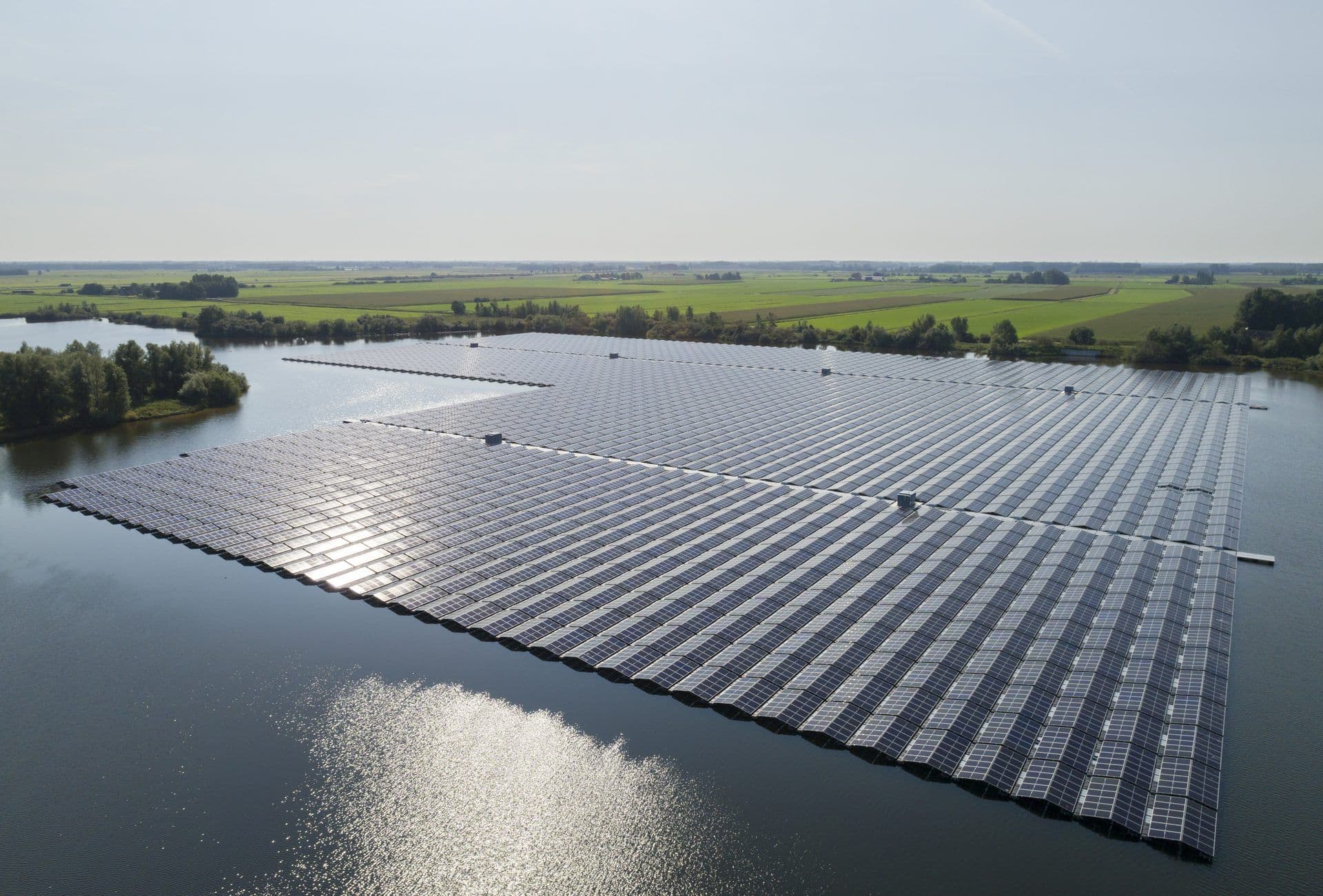
Floating solar, sometimes called floating photovoltaics or FPV, is exactly what the name suggests: solar panels mounted on structures that float directly on water, usually reservoirs, dams, or lagoons, rather than being installed on land or rooftops.
It sounds like a niche idea, but it's becoming a genuinely serious part of the solar industry, especially in places where land is scarce or where existing water infrastructure can be put to a second use.
How Does Floating Solar Actually Work?
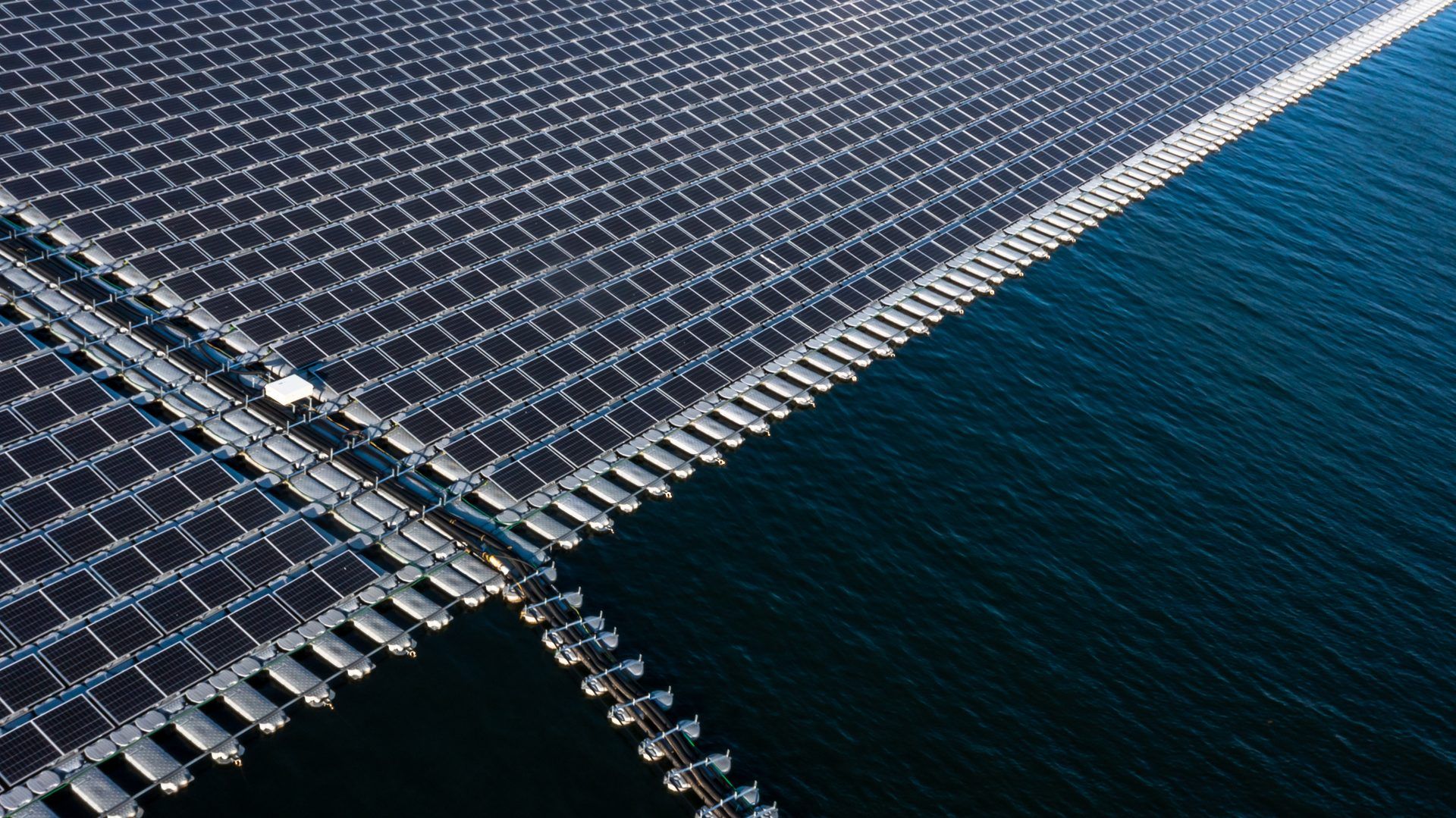
The underlying solar technology is identical to any other solar farm. Panels capture sunlight, convert it into DC electricity, and an inverter turns that into usable AC power.
What's different is the platform underneath. The panels sit on specially engineered floating structures, anchored so they can handle changing water levels, wind, and waves without drifting or capsizing. Engineers have to plan carefully for reservoirs where water depth can swing dramatically between wet and dry seasons.
There's a genuinely useful side benefit too. Covering part of a reservoir's surface with panels reduces evaporation, since the panels block direct sunlight from hitting the water. Some projects report evaporation reductions of around 30 percent, which matters a lot in drought prone regions.
Why Build Solar on Water Instead of Land?
A few real advantages make this worth the extra engineering complexity.
It avoids competing for valuable land, which matters in places where land for agriculture, housing, or conservation is already in short supply. It can often connect to existing infrastructure too, since a dam or reservoir usually already has transmission lines, substations, and grid access nearby, cutting both cost and construction time. And water tends to have a cooling effect on the panels, which can modestly improve how efficiently they perform compared to a hot rooftop or open field.
Is Floating Solar Happening in Africa?
Yes, and it's picking up real momentum.
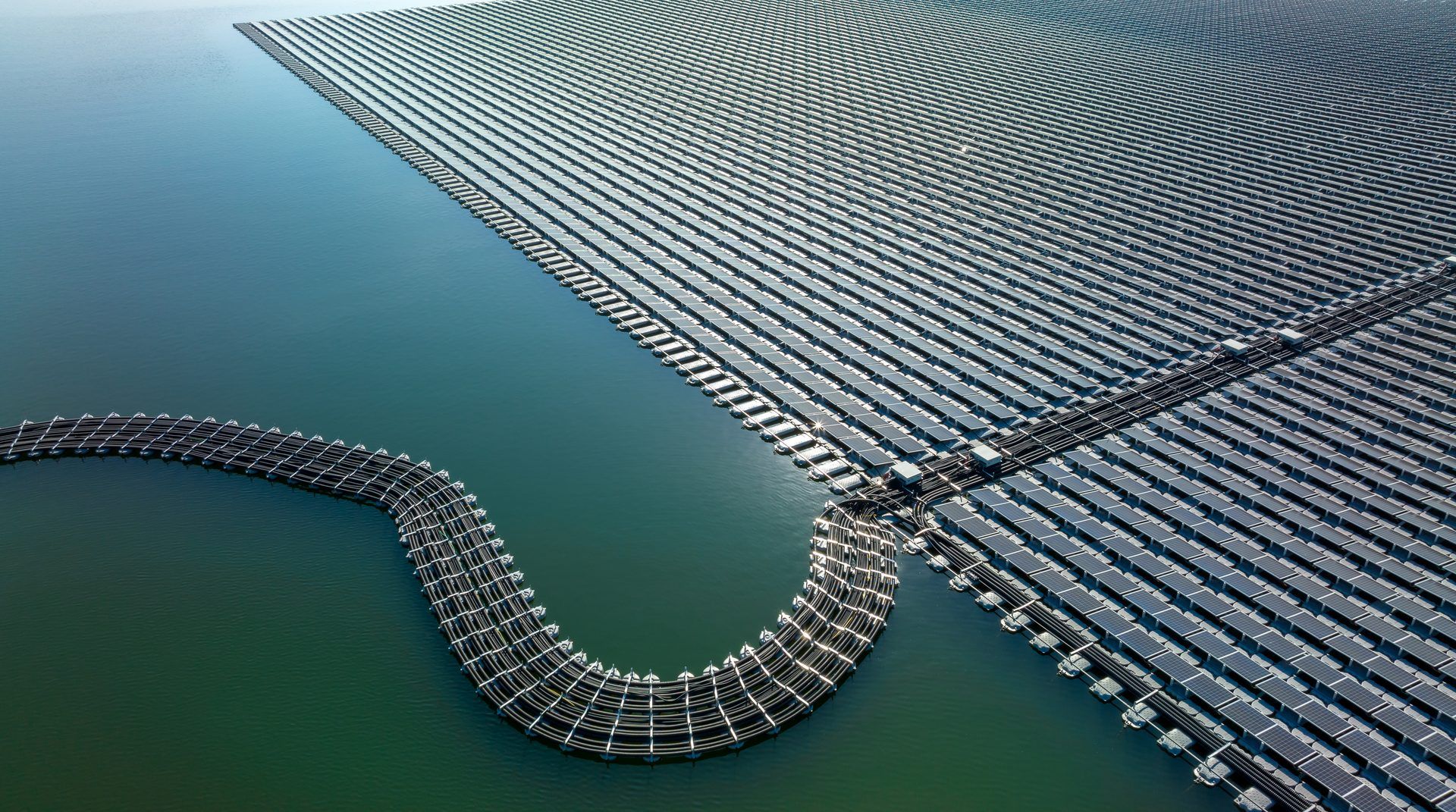
Morocco is currently home to Africa's largest operating floating solar plant, a 13 megawatt installation on the Oued Rmel Dam reservoir, built across nearly 22,000 panels on floating platforms, supplying power to the industrial facilities around the Tanger Med port complex.
But the bigger story is still ahead. Zimbabwe is developing a floating solar project on Lake Kariba, the world's largest artificial lake by volume, with plans for as much as 600 megawatts, beginning with an initial phase and expanding in stages. Nigeria has also moved forward with plans for a large floating solar development at Kainji Dam, targeting eventually up to 1 gigawatt of capacity, which would make it one of the largest floating solar facilities anywhere in the world.
Ghana got there earlier with a 5 megawatt floating installation on the Black Volta River, the first of its kind in West Africa, with plans to scale it up considerably further.
Researchers have pointed out that Africa's floating solar potential is enormous. One widely cited estimate suggests that using just 1 percent of the continent's reservoir surface area for floating solar could generate around 100 gigawatts of electricity, more than Kenya, Nigeria, and South Africa currently produce combined.