
The way households generate, store and consume electricity is evolving. As unreliable grid supply continues to create challenges for consumers in several West African markets, integrated energy systems are emerging as an alternative approach to managing household electricity needs.
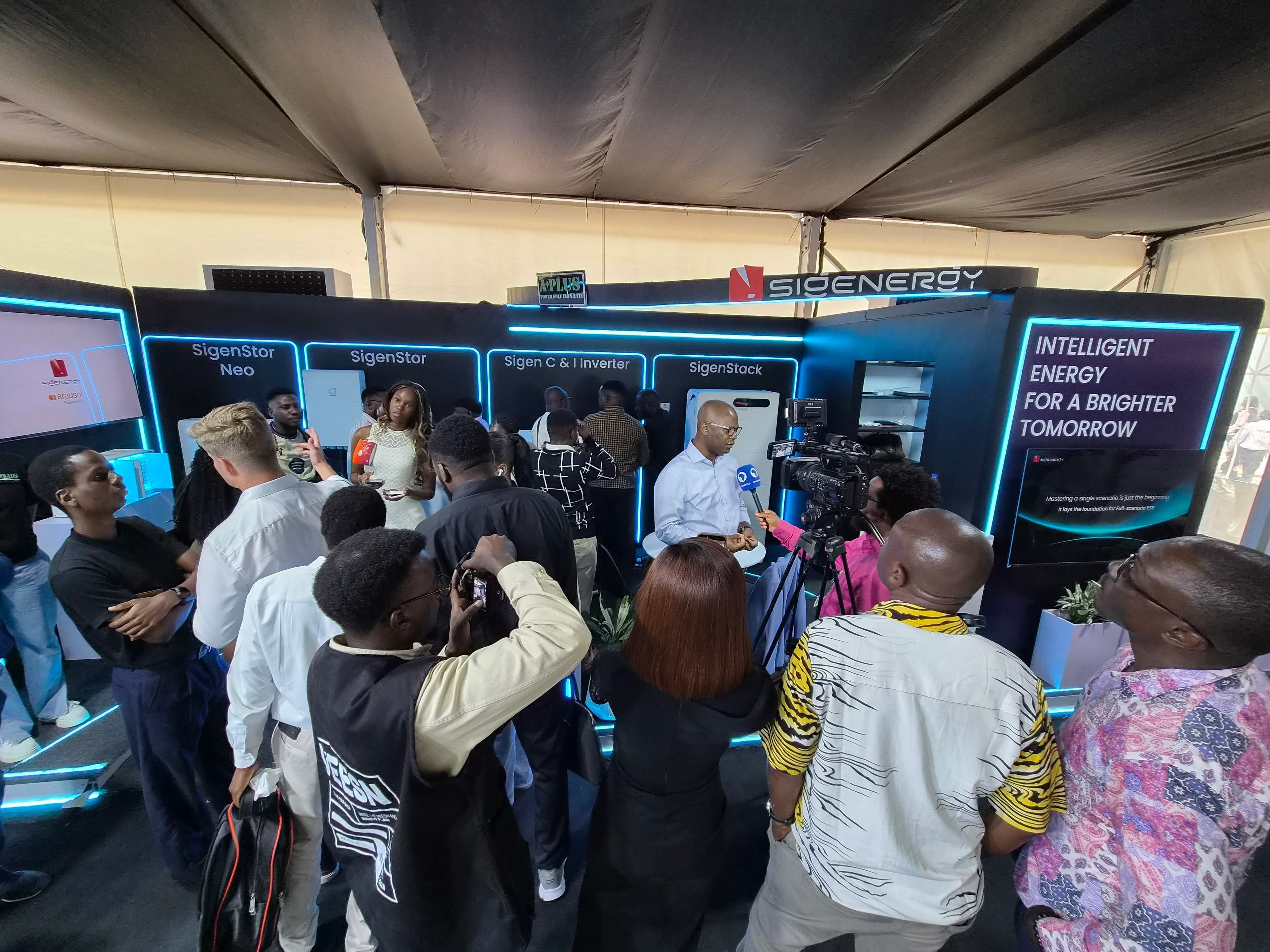
A recent development in this space is the West African launch of Sigenergy's SigenStor Neo, announced on 30 October 2026 during Nigeria Energy 2026 in Lagos. The platform brings solar generation, power conversion, battery storage and energy management together within a single integrated system, highlighting the growing role of intelligent energy technologies in decentralised power solutions.
Bringing Multiple Energy Functions Together
Traditionally, residential solar installations may require separate components for solar conversion, battery storage and energy management. All-in-one systems aim to simplify this arrangement by combining these functions into a unified platform.
SigenStor Neo integrates a photovoltaic inverter, battery power conversion system, battery storage and an energy management system. Its modular design also supports connections between solar panels, the electricity grid and external backup generators through dedicated Smart and Backup Ports.
This integrated approach can simplify how different energy sources work together within a household, allowing users to manage electricity supply through a connected system.
The Role of AI in Energy Management
One of the notable features of this technology is its AI-driven energy management capability. Through the mySigen application, machine learning is used to optimise household energy strategies by managing electricity from solar generation, battery reserves and grid supply.
Rather than relying entirely on manual switching between different power sources, intelligent energy management can help determine how available electricity should be used and stored based on household requirements and system conditions.
For markets where grid supply can be inconsistent, this capability offers an additional layer of control over household energy consumption.
Towards Smarter Decentralised Energy Systems
The introduction of integrated storage platforms reflects a wider shift towards decentralised energy solutions. As solar adoption grows, combining generation, storage and intelligent control could make residential energy systems more adaptable and efficient.
For West African markets, the opportunity lies in making these technologies accessible, reliable and suitable for local energy requirements.
The future of household energy may not depend on a single power source, but on how effectively multiple sources work together. Intelligent energy management is becoming an important part of that transition.