
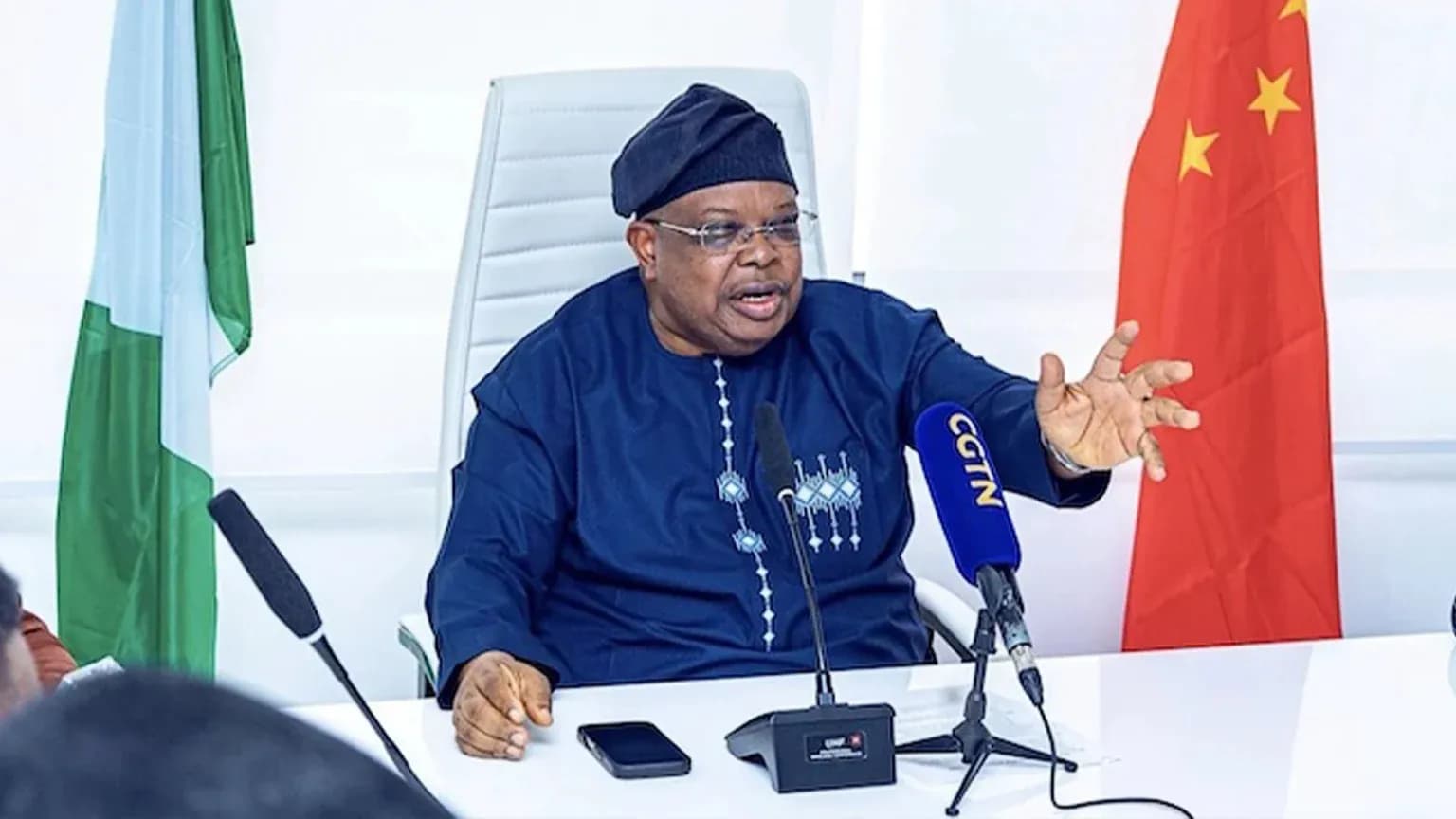
Africa’s Energy Deficit Is a Global Security Concern: Joseph Tegbe
Approximately 600 million people across Africa still lack access to electricity, making the continent’s energy deficit an increasingly important issue for global energy security, according to Nigeria’s Minister of Power, Joseph Tegbe.
Speaking at the opening plenary of the 50th Middle East Energy 2026 Leadership Summit in Dubai, Tegbe delivered a keynote address titled “Energy Security and the Effect of Geopolitics.” He highlighted Africa’s vast natural resources, solar potential, growing population and rising energy demand as factors that will increasingly shape global energy geopolitics.
Why is Africa’s electricity deficit a global security concern?
Tegbe said Africa could no longer be considered a peripheral player in global energy discussions. With approximately 600 million people still without electricity, the continent’s energy challenges have implications for energy security in major global centres, including London, Tokyo, Washington and Dubai.
He emphasised that energy security in 2026 extends beyond hydrocarbon reserves. It also depends on resilient critical mineral supply chains, electricity grids, investment capital and institutions capable of ensuring reliable energy supplies to homes, hospitals and industries.
What role can Nigeria play in global energy security?
The minister highlighted Nigeria’s more than 200 trillion cubic feet of proven natural gas reserves and its two-decade record of reliable liquefied natural gas (LNG) supply to Europe and Asia.
He positioned the country's energy resources and power sector reforms as important elements of its contribution to the changing global energy landscape.
How are Nigeria's power sector reforms creating investment opportunities?
Tegbe described the Electricity Act 2023 as the most far-reaching reform of Nigeria's power sector in a generation. The legislation ended the longstanding federal monopoly and opened the way for 37 emerging electricity markets across the federation.
However, he stressed that attracting the capital needed to develop these markets would require regulatory certainty, contract sanctity and bankable offtake arrangements.
“Capital does not flee risk; it flees uncertainty. Investors will price risk all day long; what they cannot price is a rule that changes after the contract is signed,” he said.
What should international partners prioritise when investing in Africa?
Tegbe urged global partners to move beyond extracting Africa's raw materials and focus on local processing, manufacturing, skills transfer and patient capital.
He argued that these investments would enable African countries to retain more economic value from their natural resources while strengthening domestic industries and contributing more meaningfully to global energy security.
What are the priorities for a secure and affordable energy future?
The minister outlined four key propositions: diversification as a form of strategic insurance, stronger electricity grids, affordability as a security issue, and an orderly and just global energy transition that recognises the circumstances of individual countries.
His message was that Africa must have a greater role in shaping the global energy future, supported by investment in infrastructure, technology and local industrial development.
Concluding his address, Tegbe invited international partners to participate in the continent's development.
“Nigeria has chosen to build. Africa has chosen to build. And we invite you, in the spirit of this remarkable city and this landmark fiftieth summit, to build with us,” he said.