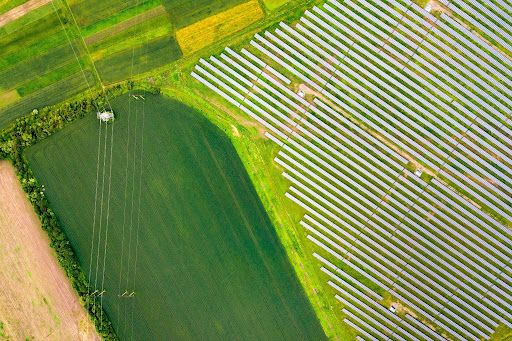
What if the same piece of land could help grow crops and produce electricity at the same time? That is the idea behind agrivoltaics.
Agrivoltaics combines agriculture with solar power by placing photovoltaic panels on farmland or agricultural sites while continuing to use the land for crops, livestock or other farming activities. Instead of treating food production and solar generation as completely separate uses, the approach brings them together.
How does agrivoltaics work?
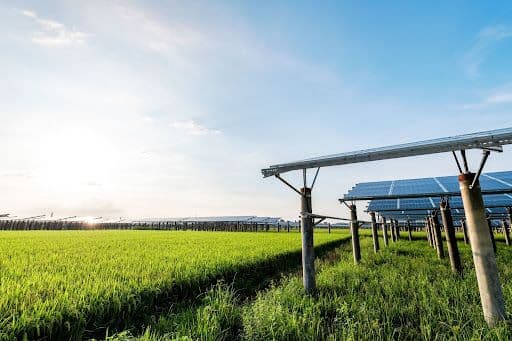
The arrangement can vary depending on the crops, climate and type of solar installation. Panels may be positioned higher above the ground, leaving space underneath for crops or farm equipment. In some projects, solar structures are placed between crop rows.
The panels also change the conditions below them. They can provide partial shade, which may help reduce exposure to intense sunlight and limit water loss in certain environments. However, not every crop benefits from reduced sunlight, so the design has to suit the agricultural activity taking place on the site.
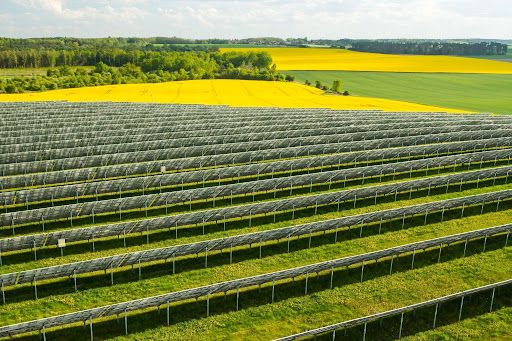
What is solar farming?
Solar farming usually refers to using land for solar electricity generation. Agrivoltaics takes this concept a step further by allowing agricultural production to continue alongside the solar installation.
The combination can create an additional source of value from farmland while producing renewable electricity. The exact benefits depend on factors such as crop type, local weather, panel design and farming practices.
Where are agrivoltaic projects being developed?
Agrivoltaic projects are being explored in different parts of the world, including regions where farmers face pressure from heat, water availability or competition for land.
There is also growing interest in agrivoltaics Africa, where agriculture plays a major role in many economies and solar resources are abundant. Carefully designed projects could potentially support both agricultural activity and electricity generation.
As research and real-world projects continue, agrivoltaics offers an interesting way to think about land use not as a choice between farming and solar power, but as an opportunity to combine the two.