
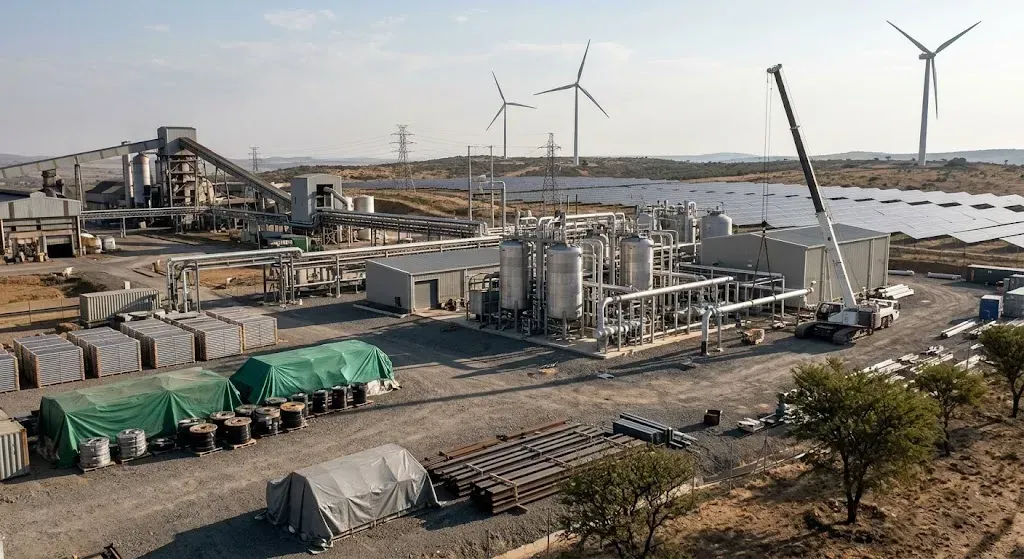
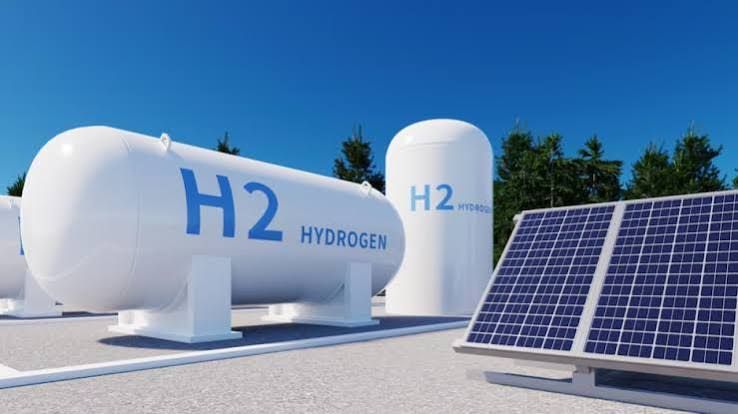
The Green Climate Fund (GCF) has approved $140 million in financing to support industrial decarbonisation in South Africa and Namibia. The funding will help attract further investment in green hydrogen and related industries, while supporting efforts to reduce emissions from heavy industrial activities.
The approval was granted on 27 October 2026 during the GCF’s 46th Board meeting in Songdo, South Korea. The financing will be provided through the Southern African Industrial Decarbonisation Facility (SIDF), with the Development Bank of Southern Africa (DBSA) serving as the fund’s accredited entity.
The programme operates through Climate Investor Three (CI3), a blended finance facility managed by Climate Fund Managers. Its focus includes green hydrogen production, green ammonia, green methanol, renewable energy infrastructure and reducing emissions from industries that are difficult to decarbonise.
Of the approved $140 million, $84 million will be allocated to South Africa’s SA-H2 Fund. The remaining $56 million will go to Namibia’s SDG Namibia One Fund, including $15 million for project development and $41 million for construction equity.
The wider programme aims to mobilise $1.2 billion in total investment and support between 30 and 40 industrial decarbonisation projects across the two countries. It also targets approximately 1.52 gigawatts of renewable energy capacity and an estimated reduction of 24.2 million tonnes of carbon dioxide equivalent emissions. These figures represent programme targets, not completed outcomes.
Several projects are already linked to the programme. In South Africa, the SA-H2 Fund has signed development funding agreements for Hive Hydrogen’s Coega green ammonia project and Green eFuels Producers’ wastewater-to-green-methanol facility.
In Namibia, SDG Namibia One has signed development funding agreements for projects involving green hydrogen, green iron, green ammonia and green fertiliser. These include the Hyphen green hydrogen project, HyIron’s Oshivela green iron project, Zhero Molecules’ green ammonia project in Walvis Bay and the Dâures green fertiliser project.
The financing is designed to reduce investment risks during project development and construction, stages that can make it difficult for large industrial projects to secure private capital. By combining public and private financing, the programme aims to support the development of lower-carbon industrial infrastructure and strengthen Southern Africa’s transition towards cleaner industrial production.